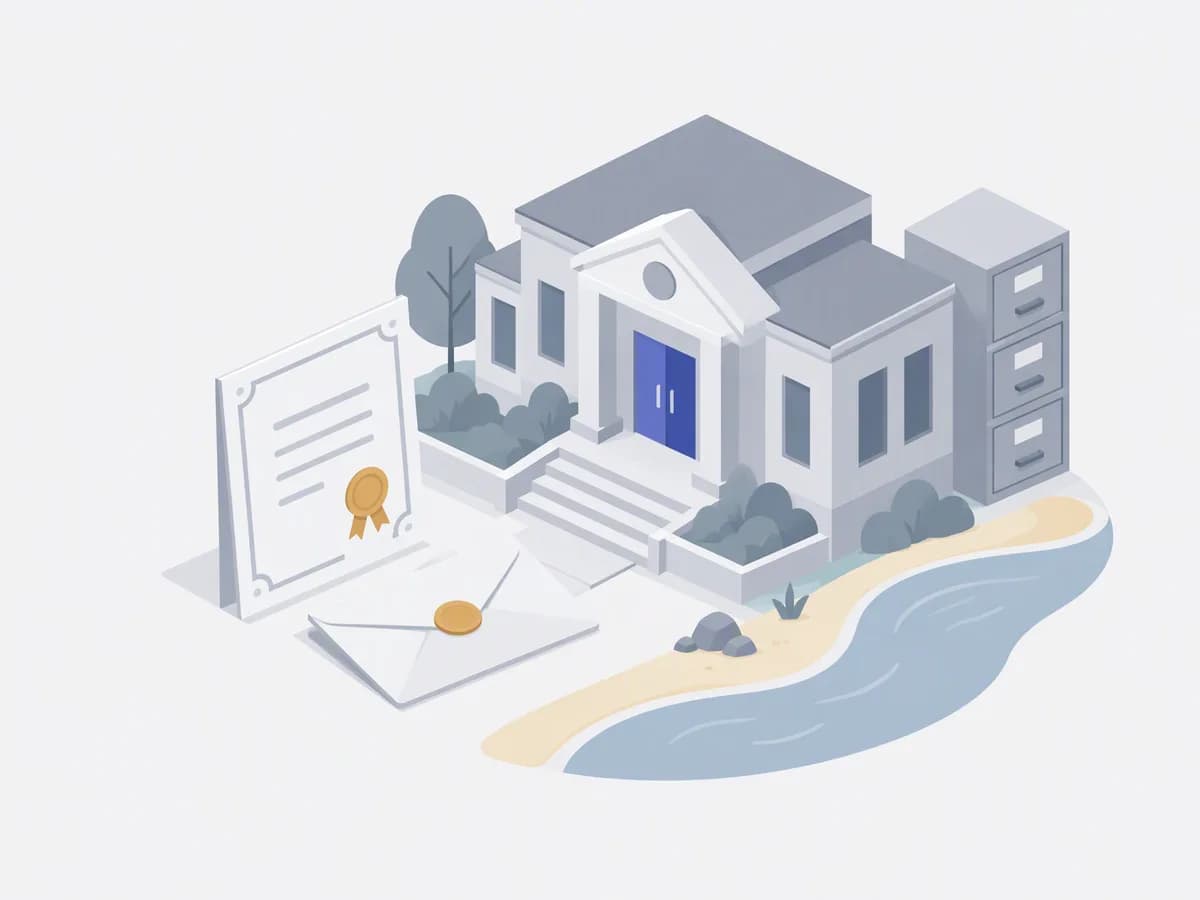
Odisha Encumbrance Certificate Online: Fees, Steps and How to Read It
Apply for an Odisha EC through the IGRS portal. Fees, documents, Form 15 and Form 16, processing time, common problems and what to check after you download it.
Who this affects
Worth a read
Read this if you need to apply for or download an Encumbrance Certificate in Odisha or are verifying title for a purchase or loan.
- Buyers
Explains how to obtain the EC buyers must check for title verification before purchase and bank loan approval.
- Lenders
Describes EC requirements lenders use to confirm mortgages are released and to sanction home loans.
- Owners
Explains using EC for khata/property tax transfer and verifying past transactions on your property.
- Lawyers & registrars
Step‑by‑step portal process and document requirements useful when preparing title opinions or processing EC requests.
Signals in this story
- Political
- Financial
- Legal
- Regulatory
- Local
Strong financial and legal signals: EC is required by banks for loans and is a legal title document; guide lists portal steps and fees.
Buying property in Bhubaneswar, Cuttack, Rourkela or any other part of Odisha? Start with the Encumbrance Certificate (EC). It is your first protection against property fraud, because it lists every sale, mortgage, release and court attachment registered against a property in the last 13 to 30 years.
Odisha has put its property registration records on the Integrated Grievance Redressal System (IGRS) portal, so the whole EC process, from application to download, can be done online. Below you will find each step for 2026, with fees, documents, usual problems and a method for reading the EC correctly.
Meaning of an Encumbrance Certificate
The Sub-Registrar's office issues an Encumbrance Certificate as an official record of all registered transactions affecting one property during the period you ask for. In Odisha, these records are kept by the Department of Registration and Stamps within the IGRS system.
An EC records:
- Sale deeds, which are transfers of ownership
- Mortgage deeds, where property is pledged to a bank or lender
- Release deeds, which show a mortgage cleared after the loan was repaid
- Gift deeds, where property is transferred as a gift
- Partition deeds, where property is divided among family members
- Court attachments, where a court order has seized the property
- Settlement deeds, which resolve property disputes
- Lease deeds for long-term rentals, if registered
An EC is issued for one property identifier, usually the survey or plot number, and covers the date range you choose. It serves as proof that the property is "free from encumbrances", that is, no loan, dispute or claim is outstanding against it.
An important limit: the EC covers registered transactions only. Unregistered agreements, family disputes not yet on paper and government prohibitions may not show up. That is why proper due diligence needs other records besides the EC.
Why the EC matters in Odisha
Whether in fast-growing Bhubaneswar, industrial Rourkela or historic Cuttack, the EC does several important jobs:
1. Banks require it for home loans
Each bank and housing finance company in Odisha wants a clear EC before sanctioning a home loan. It confirms that no mortgage or legal dispute is attached to the property. If the EC does not cover at least 13 years cleanly, the loan is rejected, whatever your credit score or down payment.
2. Checking title before you buy
Title verification rests on the EC, which shows how the property passed from owner to owner. A gap in the chain, or transactions that contradict what the seller says, are immediate red flags. Buyers use it to confirm that the seller really owns the property and may sell it.
3. Transferring the municipal khata
For property tax records in Bhubaneswar, Cuttack and other Odisha municipalities, the local authority (BMC, CMC and so on) asks for the EC along with the registered sale deed. It shows the ownership transfer is genuine for tax purposes.
4. Legal opinions and paperwork
Property lawyers in Odisha begin title opinions with the EC. It exposes problems such as unreleased mortgages, several quick transfers (which may point to fraud) and court attachments, which must be resolved before the deal can safely go ahead.
For the national picture of what an EC shows, read our complete guide to Encumbrance Certificates in India.
Form 15 or Form 16: the two kinds of EC in Odisha
Applying on the IGRS portal gets you one of two forms.
Form 15: an EC that shows encumbrances
Form 15 is issued when registered transactions turn up for the property in the dates you requested. It is the one most people receive.
A Form 15 EC is laid out as a table with these columns:
- Document number (registration number)
- Date of registration
- Type of document (sale deed, mortgage, release deed and so on)
- Executing party, the person giving up or pledging the property
- Claimant party, the person receiving or holding it
- Property details: plot or survey number, area, boundaries
- Consideration, meaning the transaction value
Example: for a 10-year EC on a property in Patia, Bhubaneswar, Form 15 might list:
- In 2016 Ramesh Patel sold to Suresh Kumar by sale deed (Rs. 45 lakhs)
- In 2017 Suresh Kumar mortgaged it to SBI (Rs. 30 lakhs)
- In 2021 SBI executed a release deed and the mortgage was cleared
- In 2025 Suresh Kumar sold to the present seller (Rs. 70 lakhs)
That sequence shows a clean title and a bank loan that was properly released.
Form 16: the Nil Encumbrance Certificate
Form 16 comes when no registered transactions exist in the period you requested. In Odisha, a Nil EC can mean:
- The property truly has had no transactions, for example if one family has held it for decades
- The land is unregistered or government land
- The IGRS records are incomplete or wrongly indexed
- You used the wrong plot or survey number in your search
A Nil EC is not automatically good news. Suppose the seller says they bought five years ago, yet the EC lists nothing. Then the seller may be lying, the original purchase may never have been registered (which is illegal), or you may be looking at the wrong property records. Any of these is a major red flag.
Our guide on Form 15 vs Form 16 Encumbrance Certificates compares the two in detail.
Applying for an Odisha EC online, step by step
Odisha's IGRS portal (https://odishaigrs.in/) lets you complete the EC application online. This is the process for 2026:
Step 1: Go to the Odisha IGRS portal
Open https://odishaigrs.in/, or search "Odisha IGRS" on Google. From the homepage menu, click "EC Search" or "Encumbrance Certificate".
Step 2: Register or log in
New users should:
- Click "New User Registration"
- Give a mobile number, email, name and address
- Set a password
- Confirm the mobile number with an OTP
- Finish registration
If you already have an account, just log in.
Step 3: Complete the EC application form
After logging in, choose "Apply for EC". Provide the following.
Property location:
- District, chosen from the dropdown (Khordha, Cuttack, Ganjam, Puri and so on)
- Sub-Registrar Office (SRO) having jurisdiction over the property
- Village or Ward, meaning the name of the village or municipal ward
Property identification:
- Plot Number or Survey Number as in the sale deed or property papers
- Khata Number, if you have it
- Mouza or Village Name, the revenue village name
Period:
- From Date, when the search starts, typically 13 or 30 years ago
- To Date, when it ends, usually today
Applicant:
- Name, mobile number and email, filled in from your registration
- The EC's purpose, picked from choices like "Property Purchase", "Bank Loan" or "Legal Verification"
Step 4: Upload documents
The IGRS portal may ask you to upload:
- A copy of the sale deed or other property document (PDF, up to 2MB)
- Identity proof: Aadhaar or PAN
- Address proof, if it differs from the registered address
Tip: scan your documents in advance as clear, compressed PDFs so the upload does not fail.
Step 5: Pay the fee online
Once you submit the form, the payment gateway opens. Odisha EC fees for 2026 are:
- Rs. 50 for an EC search of up to 15 years
- Rs. 100 for 15 to 30 years
- Rs. 10 extra as an online convenience fee
You can pay by:
- Net banking
- Debit or credit card
- UPI
After payment, save the receipt and the application reference number. You need them to track the application and download the EC.
Step 6: Processing
After payment is confirmed:
- The application goes to the Sub-Registrar Office concerned
- SRO staff check the property details and search the registration database
- It usually takes 3 to 7 working days, depending on SRO workload
You will get SMS and email updates on the status.
Step 7: Download the EC
When it is processed, log in to the IGRS portal again:
- Choose "Track Application" or "View EC"
- Type in your application reference number
- Save the digitally signed Encumbrance Certificate as a PDF
The Sub-Registrar signs the EC digitally and adds a QR code for verification. You can confirm it is genuine on the IGRS portal with the document number.
Offline option: to apply in person, go to your local Sub-Registrar Office with the same documents and fees. The EC normally arrives in 3 to 5 days.
Documents you need for an Odisha EC
These are required whether you apply online or offline:
- Papers that identify the property — a sale deed or allotment letter bearing the plot or survey number — a khata certificate or property tax receipt if you have one — the ROR (Record of Rights) with khata and plot details
- Papers that identify you — Aadhaar card — PAN card — Voter ID
- Proof of address — Aadhaar card — a utility bill — Passport
- The application form, completed online or downloaded from the IGRS portal
For a bank home loan: the bank usually applies for the EC for you through its empaneled legal vendors. You may have to hand over the property documents and sign an authorization letter.
EC fees in Odisha (2026)
As of February 2026, official EC fees in Odisha are:
- Search covering 15 years or less · Fee: Rs. 50
- Search covering 15 to 30 years · Fee: Rs. 100
- Rush handling inside 24 hours · Fee: Rs. 500, given at the SRO's discretion
- Convenience charge for paying online · Fee: Rs. 10
Ways to pay:
- Online: net banking, credit or debit card, UPI
- At the SRO: cash, or a DD in favor of "Sub-Registrar, [Office Name]"
Time taken:
- Online: 3 to 7 working days
- Offline: 3 to 5 working days
- Urgent, where offered: 1 working day
Exemptions: none. Government departments and courts pay the same EC fees in Odisha.
Reading your Odisha EC
Once you have the EC from the IGRS portal, interpret it as follows.
1. Check the header
These should agree with what you applied for:
- Where the property is: district, SRO, village or mouza, and plot number
- The search window, from date to date
- Your own name as applicant
2. Go through the table from oldest to newest
Begin with the earliest entry and move forward. For every transaction, note:
- Nature of the document: sale, mortgage or release deed?
- Executing party, who handed over the property
- Claimant party, who took it
- Consideration: does the amount fit market rates and trends?
Red flags:
- A mortgage deed with no matching release deed, which means the loan may still be pending
- Fast repeated sales, where 3 or 4 sales in 2 years often signal fraud or distress selling
- Court attachments: a court order attaching the property kills the deal until it is resolved
- Partition deeds: check that the plot you are buying is correctly identified after partition
- Gift deeds: check whether other heirs could challenge a family gift deed
3. Trace the title chain
Now start with the current owner and go backward:
- Does each sale deed name the previous owner as the executing party?
- Is there any break where ownership is unclear?
- Does the chain run back to a government land grant or to well-established ownership of 30+ years?
4. Compare with the sale deed
Match the EC against the seller's sale deed:
- Do the document numbers agree?
- Are the boundaries and extent identical?
- Is the consideration in the EC the same as in the sale deed?
If reading ECs is new to you, our guide on how to read an Encumbrance Certificate walks through annotated examples.
5. Verify the digital signature and QR code
An Odisha EC from IGRS carries:
- The Sub-Registrar's digital signature
- A QR code that links to a verification page
- A unique document reference number
Scan the QR code, or check the document number on the IGRS portal, to be sure it is not forged.
Frequent problems when applying in Odisha
1. A wrong plot or survey number
Many properties in Odisha, especially in the older parts of Bhubaneswar and Cuttack, were re-surveyed or re-subdivided. The plot number in your sale deed may not match the current IGRS database. Fix: get the updated plot number from the Tehsildar office or the revenue inspector before applying.
2. Property missing from the IGRS database
When the IGRS portal says "No records found", the cause may be:
- An area that is not yet digitized, such as rural areas
- Documents registered before computerization, which was before 2010 in many areas
- A search under the wrong SRO jurisdiction
Fix: go to the Sub-Registrar Office in person with your documents. They can search the old registers by hand.
3. Slow processing
Some Sub-Registrar Offices in Odisha, particularly in rural areas, lack staff or have technical problems. If your EC application is still pending after 10 days, call the SRO helpline or go in person to follow it up.
4. Boundary mismatches
The area or boundaries in the EC may differ slightly from your documents because of clerical errors made at registration. Fix: have a licensed surveyor check the actual plot boundaries before you complete the purchase.
5. Incomplete transaction history
The EC lists registered documents alone. If the seller admits to earlier unregistered agreements or family arrangements, those will not appear. Fix: go deeper with ROR checks, litigation searches and, for inherited property, verification of the family tree.
How LegiScore helps with Odisha property checks
Getting the EC from Odisha IGRS is easy. Reading it correctly, and knowing which other checks to run, is where most buyers and even some lawyers struggle.
LegiScore is India's first AI-powered property verification platform, and it goes well beyond a manual EC review:
Automated EC analysis
The AI engine analyzes your Odisha EC at once and flags:
- Mortgages that were never released
- Suspiciously quick transfers
- Missing links in the title chain
- Document numbers that do not match
- Value gaps that suggest possible fraud
Checks across several sources
LegiScore does not stop at the EC. It cross-verifies:
- Revenue records (ROR), to confirm khata ownership
- Court records (eCourts), to look for pending litigation
- Government prohibitions, to confirm the property is not on prohibited lists
- Compliance, meaning building approvals and occupancy certificates
- Title chain, traced back 13 to 30 years
The LPS rating (AAA to C)
Each property verified through LegiScore gets a Legal Property Score (LPS) from AAA (cleanest title) to C (high-risk property), across 5 dimensions:
- Title Chain
- Encumbrance
- Litigation
- Compliance
- Revenue Records
Banks, NBFCs and property buyers rely on the LPS rating to decide fast and with confidence. The first rating includes a full title search report.
Quicker than a traditional legal opinion
Lawyers in Odisha need 2 to 3 weeks to collect records, verify manually and draft an opinion. LegiScore completes the same work in minutes and gives an instant digital report with the LPS score, a risk summary and detailed findings.
For a plot in Chandrasekharpur in Bhubaneswar, an apartment in Buxi Bazaar in Cuttack or farmland near Rourkela, LegiScore gives you confidence that the investment is legally sound.
See your property's legal health with a free LPS rating today.
Frequently asked questions
- What is the time needed to get an Encumbrance Certificate online in Odisha?
- Plan on 3 to 7 working days from the time you submit and pay on the Odisha IGRS portal, depending on how busy the Sub-Registrar Office is. Where urgent handling is offered, the EC can arrive in 24 hours for an additional Rs. 500.
- Is an Encumbrance Certificate available for rural property in Odisha?
- Yes, with a caveat. Rural property may be only partly digitized in IGRS, notably when its last transaction predates 2010. Applying online is still possible, yet you might have to attend the Sub-Registrar Office to have legacy registers searched manually. Carry your sale deed and other papers showing plot or survey numbers.
- How much does an Encumbrance Certificate cost in Odisha?
- The official government fees for 2026 are Rs. 50 for an EC of up to 15 years and Rs. 100 for 15 to 30 years, with an additional Rs. 10 for paying online. The IGRS portal adds no hidden charges. Avoid touts and agents who ask for more, as nothing stops you applying on your own.
- For how many years should I get an EC when buying property in Odisha?
- Most buyers and banks ask for a minimum 13-year EC. A 30-year EC is advised for high-value property, inherited property or property with a complex history. The 13-year period follows the prescription period for property claims under the Indian Limitation Act. Ask your bank or legal advisor about their specific requirement.
- What if the EC shows a mortgage that is still pending?
- If the EC lists a mortgage deed but no release deed, the property remains pledged with the bank or lender. Hold off buying until the seller shows the loan is repaid and gets a registered release deed. That requires the seller to obtain an NOC (No Objection Certificate) from the lending bank and register the release deed at the Sub-Registrar Office. Go ahead with the deal only when a new EC carries the release deed.
- How do I confirm that an Odisha Encumbrance Certificate is genuine?
- Yes. The Sub-Registrar digitally signs every EC from the Odisha IGRS portal and prints a QR code on it. Scan the code, or visit the IGRS portal (https://odishaigrs.in/), choose "Verify Documents" and key in the EC's document reference number. The system tells you whether the department really issued it. Reject any EC that has no digital signature or cannot be checked online.
Sources
We summarise published reporting in our own words and link to the original. Publishers can ask for a correction or removal at editor@landandlaw.in. We act within 48 hours. Editorial policy
General information only. This is not legal advice; consult a qualified property lawyer for your situation.
Need a property report?
Get a comprehensive title search report powered by LegiScore.
Powered by LegiScore Trusted by homebuyers, lawyers and lenders
Related reading
How to check land records online in Bihar
State Guides 22 Oct 2026
6 min read
Worth a read for Buyers, Owners

How to check land records online in Uttar Pradesh
State Guides 22 Oct 2026
6 min read
Worth a read for Buyers, Owners

Tamil Nadu: Patta, Chitta and What They Do Not Prove
State Guides 9 Oct 2026
4 min read
Worth a read for Buyers, Owners

Andhra Pradesh: Land Record Checks to Run Before You Buy
State Guides 11 Oct 2026
5 min read
Worth a read for Buyers, Owners