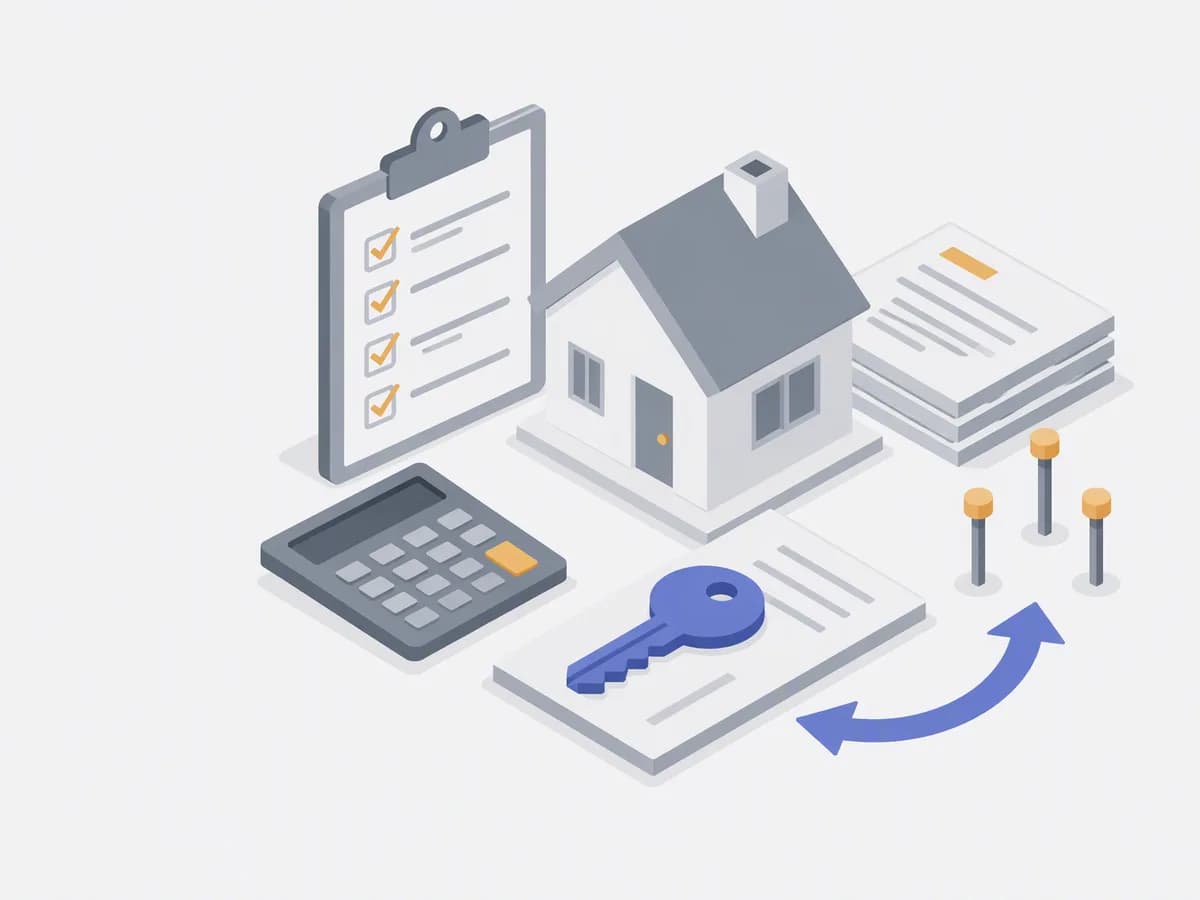
A 15-Point Property Due Diligence Checklist for Indian Buyers [2026]
Fifteen checks to run before buying property in India, from title deed and EC to RERA registration, court cases and possession.
Who this affects
Worth a read
Read this if you are buying property in India and need a comprehensive legal, regulatory and practical due-diligence checklist.
- Buyers
Follow the 15-point checklist to verify title, encumbrances, approvals, taxes and possession before completing a purchase.
- Lawyers & registrars
Use the checklist when issuing title certificates and advising clients; incomplete checks create professional liability risk.
- Lenders
Bank valuations, EC and title defects identified in due diligence can cause loan rejection or extra scrutiny.
- Developers
Ensure RERA registration, approved plans and environmental clearances are in order to avoid demolition or buyer disputes.
Signals in this story
- Political
- Financial
- Legal
- Regulatory
- Local
Strong legal, regulatory and financial signals: the checklist focuses on title, litigation, taxes, RERA, approvals and bank valuation risks.
Meaning of property due diligence
Property due diligence is a methodical inquiry into the legal, financial and physical condition of a property, carried out before the deal is closed. It runs from confirming the seller's title and looking for encumbrances to checking regulatory approvals and weighing the risk of litigation.
Land records in India are spread over several government departments, and property fraud is still common. So due diligence is not a choice. It is the most important step in any property deal, and leaving out a single check can mean years in court or the loss of the whole investment.
The reasons you cannot skip it
Property disputes make up over 66% of all civil litigation in India, and a case takes 15-20 years on average to be resolved. Careful due diligence is the only dependable way to spot a risk before it becomes a legal fight.
When due diligence turns up title defects, banks turn down the loan, and the buyer can lose both the property and the earnest money. A lawyer who issues a title certificate after an incomplete check risks a claim for professional negligence. Proper due diligence costs only a small part of what a disputed property can cost you.
The 15 checks
1. The title deed
Obtain the original title deed, whether sale deed, gift deed or partition deed, which establishes the seller's ownership. Confirm it is registered with the sub-registrar and that its description fits the real property. Read the deed for any conditions or restrictions.
2. The ownership chain (at least 13 years)
Trace ownership from the present seller back at least 13 years, and 30 years if possible. Each transfer must have a registered document behind it. A gap in the chain points to a possible title defect, which must be investigated and settled before you go on.
3. The Encumbrance Certificate (EC)
Get the EC from the sub-registrar's office for no fewer than the last 13 years. Check that every mortgage has a release deed, that the ownership chain agrees with the title documents, and that there are no court attachments or government acquisition orders.
4. Revenue records and mutation entries
Read the latest revenue record (pahani, pattadar passbook or 7/12 extract, depending on the state) to see whether the seller is shown as the current owner. Each change of ownership should be mutated in the revenue records. A mismatch between registration and revenue records is a red flag.
5. Survey number and boundaries
Compare the survey number, plot boundaries and total extent with the sale deed and revenue records. Visit the site and measure it, to rule out encroachments or boundary disputes. If the revenue department can provide a survey sketch, get one.
6. RERA registration
For an apartment or project still under construction, confirm its RERA registration on the relevant state RERA website. Look at the developer's record of compliance, the promised timeline and any complaints by other buyers.
7. Sanctioned plan and Occupancy Certificate
Get copies of the building plan sanctioned by the municipal authority, and see that the building matches it. A finished building must have an Occupancy Certificate (OC), which shows it meets safety and construction standards.
8. Land use and zoning
Get the land use class, whether residential, commercial, agricultural or industrial, from the local planning authority. If actual use differs from the classified use, the owner can face demolition orders or heavy penalties.
9. Search for litigation
Search eCourts for cases, pending or decided, that involve the property or the seller. Include district courts, high courts and the National Company Law Tribunal (to catch insolvency of a developer). Also ask the local police station about criminal cases tied to the property.
10. Tax payments
Get property tax receipts for the last 5 years and confirm nothing is due. Ask the municipal corporation about special assessments or betterment charges. Unpaid taxes form a first charge on the property, ranking above even mortgage claims.
11. Society or association NOC
When buying an apartment, get a No Objection Certificate from the housing society or owners' association. Confirm there are no maintenance dues, special assessments or disputes between the seller and the society.
12. Power of Attorney
If the seller acts through a Power of Attorney (PoA), check its validity, scope and registration. An irrevocable PoA given for consideration is treated differently from a general PoA. The Supreme Court has warned against sales carried out only through a PoA with no registered sale deed.
13. Environmental and regulatory permissions
See whether the property lies in a restricted zone: CRZ (Coastal Regulation Zone), forest land, a defence area or a heritage zone. For large projects, check the environmental clearances. A property in a restricted zone faces tough building limits or the risk of demolition.
14. Valuation and market price
Get a professional valuation report and compare it with recent deals in the area. A price far below the market is a warning of a fraudulent transaction. When a bank lends, it values the property itself, and a large gap from the purchase price draws extra scrutiny.
15. Physical possession
Make sure real possession agrees with the legal papers. Find out who actually occupies the property, whether tenants hold rights under rent control law, and whether any unauthorised construction exists. A claim of adverse possession can arise after 12 years of continuous unauthorised occupation.
Warning signs
A seller in a hurry who offers a price well below the market often hides legal trouble or means to defraud. Honest sellers seldom cut far below market value.
If the seller shows only photocopies, or says the originals are with a bank but cannot produce a confirmation letter from the bank, the property may be mortgaged elsewhere or the papers may be forged.
Several changes of ownership in a short time, with no clear business reason, can be a chain of fraudulent deals built to look legitimate.
When the seller's name is missing from the latest mutation records, or the land area in the sale deed differs from the revenue records, investigate at once.
If a developer is building without building permits, environmental clearances or RERA registration, the buyer risks demolition and cannot get a home loan.
Manual due diligence compared with LegiScore AI
Manual due diligence means visiting several government offices, reviewing papers by hand and hiring separate professionals for legal, technical and financial checks. It usually takes 2-4 weeks and costs Rs. 15,000-50,000, and the result still rests on how careful each professional is.
LegiScore's AI platform analyses the documents automatically, cross-references data from eCourts, revenue departments and registration offices, and produces a LegiScore Property Score (LPS) rating. It runs all 15 checks at once, flags mismatches that a manual review could miss, and returns results in minutes instead of weeks.
The LPS rating (AAA to C) is a uniform, objective assessment that banks, lawyers and buyers can use, which removes the subjectivity of traditional legal opinions.
Frequently asked questions
- How much time does property due diligence need?
- A manual check takes 2-4 weeks, depending on how quickly documents arrive and how fast government offices respond. An AI platform such as LegiScore can finish the analysis within minutes after documents are uploaded.
- Who ought to carry out the due diligence?
- The best choice is a property lawyer who knows your state's land laws. When you take a bank loan, the bank does its own checks. LegiScore adds an AI verification layer that works alongside professional review.
- Do resale properties need due diligence?
- Yes, without question. A resale property is riskier than a new one because its ownership chain is longer and earlier disputes may not show at first. A 30-year title search is advised for resale properties.
- What if the due diligence uncovers problems?
- Small problems, such as a pending mutation or unpaid tax, can usually be cleared before the deal closes. Serious ones, such as title defects, pending litigation or unauthorised construction, should lead you to renegotiate or walk away.
General information only. This is not legal advice; consult a qualified property lawyer for your situation.
Need a property report?
Get a comprehensive title search report powered by LegiScore.
Powered by LegiScore Trusted by homebuyers, lawyers and lenders
Related reading

Mint compares home-loan prepayment with SIP investing for borrowers
Buying & Selling 19 Oct 2026
3 min read
Source: Mint
Worth a read for Buyers, Owners
Delhi NCR: Leasehold or Freehold? Why It Changes Your Purchase
Buying & Selling 9 Oct 2026
5 min read
Worth a read for Buyers, Lenders

Home loan rate hike: how EMI and tenure choices affect cost
Buying & Selling 20 Oct 2026
2 min read
Source: Mint
Worth a read for Buyers, Owners
Documents to verify before buying a resale flat in Goa
Buying & Selling 21 Oct 2026
7 min read
Worth a read for Buyers, Sellers