Buying Near a Lake in India: Is the Plot Inside the FTL or Buffer?
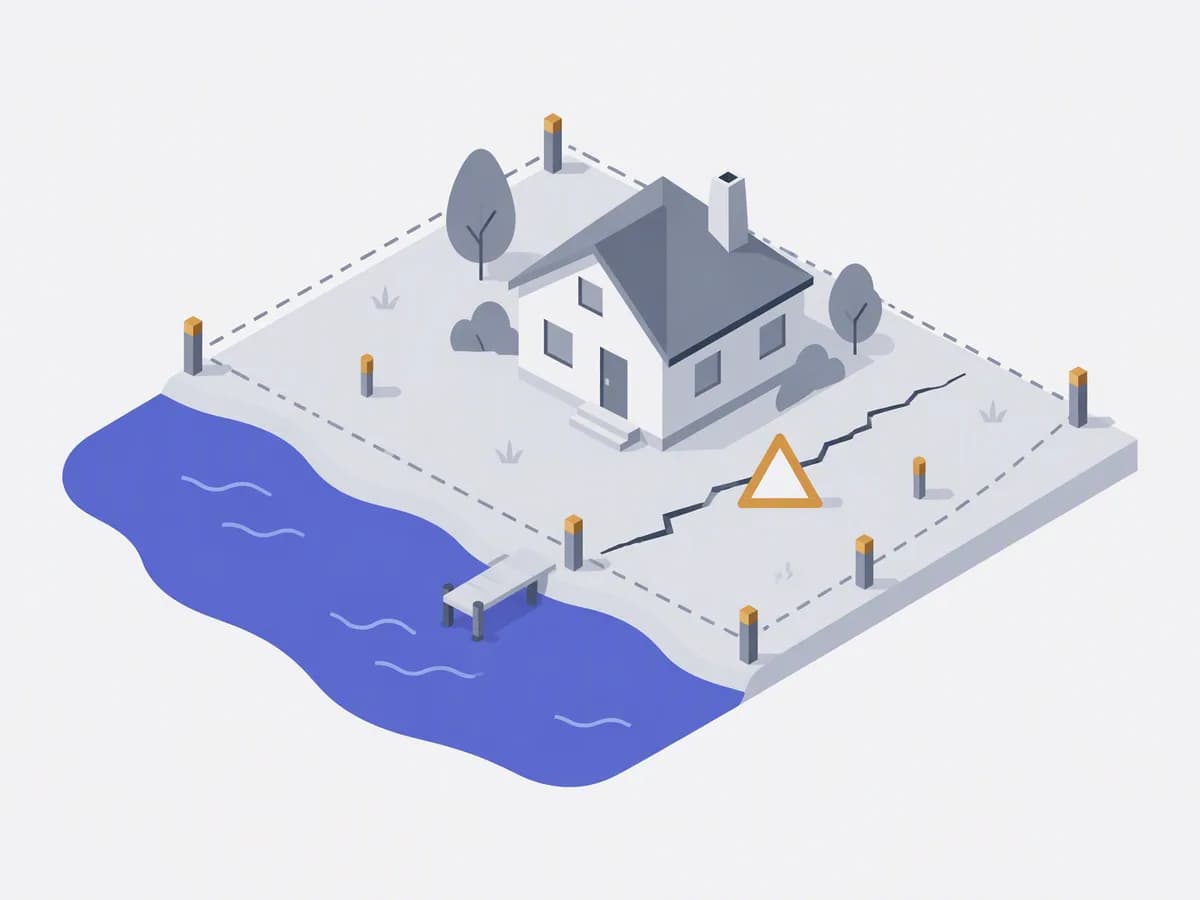
Neither a spotless title nor a nil encumbrance certificate tells you whether a plot lies within a lake's FTL or buffer. Start with the official Hyderabad and Bengaluru checks.
Who this affects
Worth a read
Read this if you are buying or verifying a plot near a lake in Hyderabad or Bengaluru.
- Buyers
You must check the lake's FTL and buffer separately because a clean title/EC does not show build prohibition.
- Owners
A spotless title and EC do not prevent your plot from being a no-construction zone or subject to demolition.
- Developers
Verify which buffer regime governs the lake and confirm survey/FTL before planning or approvals.
- Lawyers & registrars
The register and EC do not record FTL; you must consult irrigation, revenue or town-planning records and portals.
Signals in this story
- Political
- Financial
- Legal
- Regulatory
- Local
Article focuses on legal/regulatory checks (FTL, buffer rules, portals and court rulings) and gives city-specific procedures for Hyderabad and Bengaluru.
Quick answer for 2026: whether your plot lies within a lake's Full Tank Level (FTL) or protected buffer is something your sale deed, your nil encumbrance certificate (EC) and the seller's khata will not reveal. Such limits come from environmental and planning law, and the property register never records them. So land with flawless ownership papers may still be a no-build area that officials are demolishing on. For Hyderabad, find the lake on lakes.hmda.gov.in, the HMDA portal, and run the survey number through the prohibited-property search on Bhu Bharati. For Bengaluru, ask for the village map plus the survey sketch that mark the kere (tank) boundary and FTL against your survey number, and compare them to the plot. Karnataka offers no single-click portal, so a licensed surveyor who measures your plot against the notified FTL line gives the conclusive answer.
Keep one idea in mind. The register answers who owns a piece of land. It never answers whether construction is permitted there. A spotless EC can sit alongside a plot on which nothing can be built.
Why clean papers and a nil EC leave the buffer question unanswered
This gap catches out buyers who follow every standard step.
The Registration Act, 1908 is the law under which an EC is issued, and the certificate lists only what was registered against the property: sales, mortgages, gifts, leases, court attachments. Zoning, land use and environmental status have no place on it, and never have. Irrigation, revenue and town-planning departments decide whether a plot sits inside a notified water body's FTL or buffer, and they keep their own files. Nobody at the sub-registrar's office sees those files, and the two record systems are not linked.
A plot can therefore come with a valid registered deed, a nil EC, and an RTC or khata in the owner's name while lying entirely in a lake bed or buffer. Ownership is real. What fails is the land's status: it is protected, building is prohibited, and existing structures may be removed. Even a sanctioned building plan offers no safety, because later findings have overturned approvals that were granted against the FTL.
Many buyers, and a few brokers, test a property with three documents: title deed, EC and approved plan. That trio cannot detect the single defect able to wipe out the land's value. You must go to the water-body records separately and on purpose.
Defining FTL and the buffer
Full Tank Level is the upper limit that water in a tank or lake reaches before it flows out over the weir or surplus course. It is measured, not guessed. The irrigation and revenue departments fix it for each water body through field survey, then record it in the tank register, the village map and the FTL sketch. When a seller calls a plot 'near the lake', ask where the plot's survey boundary falls in relation to that surveyed FTL line. The distance to the water on the day you visit tells you nothing.
Around the FTL runs the buffer zone, a belt where building is limited or forbidden altogether, so that the water body can spread, drain and recharge. Statute already forbids development inside the water body. Under Telangana's Building Rules 2012, no development is allowed in the bed of a river or nala, or within the FTL of a lake, pond, cheruvu or kunta.
The public trust doctrine stands behind these rules. Natural water bodies are held by the state for public benefit, the Supreme Court has said for decades, and the state cannot let them be privatised or built upon (M.C. Mehta v. Kamal Nath, 1997). The Court came back to the idea in 2025 and carried it over to man-made and artificial water bodies (Swacch Association, Nagpur v. State of Maharashtra, 2025 INSC 1199). That doctrine supports each buffer notification and demolition drive described below.
The 75 metre versus 30 metre confusion
Buyers tend to ask it as an either-or. A genuine public-forum query read: how wide is the buffer for an apartment being built beside a lake in Bangalore, 75 metres from the lake edge, or 30 metres? No single number applies across India. Distance depends on the state, on whether the water body is a lake, a rajakaluve or a nala, and increasingly on how large the water body is. Your job is to locate the rule for the lake you care about.
Buffer rules in Bengaluru and Karnataka
Two regimes operate side by side. A buyer needs to know which of them covers the lake.
Most enforcement fights are still argued from a National Green Tribunal benchmark. The Tribunal set it in 2016 in a case about a Bengaluru wetland, and the Supreme Court later upheld it while applying it prospectively, which means older buildings are not unlawful for that reason alone. Its figures: a 75 metre buffer around a lake or wetland, and 50, 35 and 25 metres from primary, secondary and tertiary rajakaluves, which are stormwater drains. Courts and civic authorities cite these distances once someone challenges construction beside a Bengaluru lake.
There is also a Karnataka law notified in February 2026, amending the Karnataka Tank Conservation and Development Authority Act, 2014. It lays down lower buffer minimums for tanks that the authority administers, graded by tank and parcel size. Accounts of the precise bands conflict, as do accounts of whether it is a fresh scheme or a loosening of an earlier one. Check the current position for your own tank and do not rely on a blog's table. Two things are certain. First, the big Bengaluru lakes, broadly those above 100 acres, keep the present 30 metre buffer. Second, the easing is meant for small tanks and small parcels, some of which could end up with little or no compulsory buffer. The authority now has jurisdiction over tanks all over the state, and that includes tanks within BBMP and BDA limits.
The upshot: never presume a single distance. Before you call any distance safe, find out if the NGT benchmark, the state authority's size tiers, or both, govern your lake.
Buffer rules in Hyderabad and Telangana
No construction at all is allowed within the FTL under the Building Rules 2012. Beyond the FTL line comes a no-build buffer belt. Commonly, people cite roughly 30 metres for the bigger lakes of Hyderabad and something narrower for minor water bodies and nalas. Because each water body gets its own width, verify the figure for your lake. The Telangana Water, Land and Trees Act, 2002 (WALTA) lets the authorities notify water bodies as protected, fix their boundaries for good, and evict encroachers.
A second Hyderabad restriction surprises many buyers. Issued in 1996, GO 111 prohibits polluting activity and built development across a catchment of 10 kilometres around the Osman Sagar and Himayat Sagar reservoirs. In 2023 a decision to repeal it was put on hold, and it is still being reviewed, which means GO 111 stands unrepealed in 2026. Assume it applies and check where it stands today. The issue is politically live, and land in this catchment is subject to a limit that has no connection with its title.
Official FTL check for a Hyderabad plot
In Telangana the task is simpler, since the state created a portal specifically for it.
- Open lakes.hmda.gov.in, the HMDA lakes portal, and look for the lake by district, mandal, village or name. Every entry carries the lake ID, FTL and cadastral maps, bund details and, most helpfully, a list of survey numbers inside the FTL and the buffer. A match with your plot's number settles the question.
- Check the survey number in the prohibited-property search at bhubharati.telangana.gov.in. The old Dharani portal was replaced in April 2025 by Bhu Bharati, under the Telangana Bhu Bharati (Record of Rights in Land) Act, 2025, and links from Dharani for this search have stopped working. If a survey number is listed as prohibited, whether for water-body reasons or because of GO 111, stop there.
- Use Bhuvan (bhuvan.nrsc.gov.in), the satellite imagery service run by ISRO, to see how the plot lies relative to the water spread. Take it as a visual cross-check only. It is no legal certificate.
Your position is strong when the lake appears on the HMDA portal and your survey number is outside both FTL and buffer. When the number falls into either one, tidy title papers do not lessen the exposure.
Official FTL check for a Bengaluru plot, without a one-click portal
No public Karnataka tool matches the HMDA lakes portal, at least none that this review found. The work is manual, and it repays careful effort.
- Request the village map, the tippani and the survey sketch for your survey number from the Survey Settlement and Land Records department. These documents mark the tank (kere) boundary and, where surveyed, the FTL contour, and the plot has to be compared with that contour.
- Fetch the RTC (Pahani) on Bhoomi, landrecords.karnataka.gov.in, for ownership and land-class details. Note that it is a revenue record of ownership, so FTL and buffer status are invisible in it, exactly as with the EC.
- Consult the tank authority's records at ktcda.karnataka.gov.in if the lake is one it controls, which can include lakes within the city.
- If you need certainty, appoint a licensed surveyor to measure the plot's boundary physically against the notified FTL and whichever buffer distance is relevant. The buffer in Karnataka now varies with the size of the water body and with the regime in force, so only a field measurement against the notified line shows if a plot is clear.
Consequences when a plot lies inside the FTL or buffer
Action against encroachment is no longer hypothetical. It has changed what buyers stand to lose.
In July 2024 Telangana established HYDRAA, the Hyderabad Disaster Response and Assets Monitoring and Protection Agency, tasked with finding and clearing encroachments on lakes, ponds, nalas and other public property. A month later, in August 2024, it brought down a well-known 10-acre convention centre at Madhapur, finding that it had encroached upon a lake's FTL. Its owner insisted the land was patta, meaning clean revenue title, and pointed to a stay order. This one case best shows the principle behind this whole article: clean title is not buffer-zone clearance. By its own count, HYDRAA took back over 100 acres in its first hundred days by demolishing more than 260 structures. Bengaluru shows the same trend from the opposite side, where NGT-led eviction notices and demolitions have hit structures on lake beds and in stormwater-drain buffers.
The prospective-application rule matters for how you read the risk, not for comfort. A building that clearly pre-dates the 2016 NGT order is not unlawful automatically. Someone buying or building today gets no such shelter, and encroaching on the FTL bed has never enjoyed a grace period. Buying now, with the plot sitting inside the FTL or buffer, puts you plainly in the wrong.
Checklist before you pay
- Ask for the survey number at the start, then compare it with the water-body records on your own. A seller's claim that the plot is outside the buffer is not evidence.
- For Hyderabad, confirm the survey number at lakes.hmda.gov.in and in Bhu Bharati's prohibited-property search, and find out whether the plot is in the GO 111 catchment.
- For Bengaluru, obtain the village map and survey sketch that show the kere boundary, and ask a surveyor to measure the plot against the notified FTL and the buffer.
- A nil EC, a valid deed and a khata are needed but fall short. None addresses whether the land is in an FTL or buffer.
- Should any record place the survey number within the FTL or buffer, walk away. The alternative is a written, checkable clearance from the water-body authority. A builder's word is not that.
Summing up
A lakeside property can carry perfect ownership papers and still be heading for demolition, as title and buffer status are recorded in different registers that are never reconciled. Most buyers omit the one step that protects them. Before any money moves, take the survey number to the records that cover water bodies. In Hyderabad that means the HMDA lakes portal and Bhu Bharati. In Bengaluru it means the village map, the survey sketch and a surveyor. Make sure the plot is clear of the notified FTL and buffer. A clean EC proves just that no mortgage burdens the land. Whether the authorities will let you keep your construction is a separate matter it cannot answer.
Prefer not to assemble all this yourself? A LegiScore title report studies the entire title chain and flags exposure to water bodies, FTL and buffer alongside the EC, litigation and prohibited-property checks, delivered as a single rated report. Get a property title report.
More to read: Title search report format and 30-year TSR sample · Flat and apartment due-diligence checklist · Agricultural land purchase: the legal checks · How to read a sale deed before buying · Karnataka encumbrance certificate online guide (Kaveri 2.0) · Telangana encumbrance certificate online guide
What you have just read sets out the general legal position and is not advice on your own purchase. Distances, portal features, the standing of GO 111 and the Karnataka amendment of February 2026 are all liable to change. Ask the competent authority to confirm the rules and the status of your exact survey number, and speak to a qualified professional about the property.
Frequently asked questions
- Can land in a buffer zone still get registered and obtain a khata?
- It can, and that is how buyers end up trapped. The registration and mutation systems belong to revenue and registration offices, and neither tests FTL or buffer status. Such a plot may be sold, registered and moved onto a khata with fully clean-looking papers, yet remain unbuildable and exposed to demolition. A registration is no zoning clearance.
- Does an EC show if a plot sits in the FTL or buffer?
- It does not. The Registration Act, 1908 limits an EC to registered transactions on the property. Details of FTL and buffer are kept by irrigation, revenue and town-planning departments. Look at those records separately, as the EC never flags the risk.
- What is the right buffer for a Bengaluru lake, 75 metres or 30?
- Which one applies depends on the rule covering your lake. Enforcement disputes use the National Green Tribunal benchmark of 75 metres, plus 25 to 50 metres for stormwater drains. A separate state amendment from February 2026 fixes lower, size-graded minimums for tanks under the tank authority and holds large Bengaluru lakes at 30 metres. Identify the regime for your own lake instead of assuming one figure.
- Is GO 111 in effect in Hyderabad during 2026?
- Yes, as far as this article's writing date goes. The 2023 attempt to repeal it was suspended later in the year and is being reviewed, so no repeal has legal effect. For any plot in the Osman Sagar or Himayat Sagar catchment, consider GO 111 active, and confirm where it stands before you commit.
- Years ago I built or bought close to a lake. Does that make my house illegal automatically?
- Not automatically. The Supreme Court made the NGT buffer order apply prospectively, so older structures are not unlawful merely for being earlier. This relief excludes construction in the FTL bed and gives nothing to a person buying today. If you are buying now, check the FTL and buffer position of the specific survey number.
- What is the way to check a Hyderabad plot's FTL status?
- Search for the lake on lakes.hmda.gov.in, whose FTL and cadastral maps list survey numbers inside the FTL and the buffer, and put your survey number through the prohibited-property search on Bhu Bharati. Bhuvan satellite imagery works as a visual second look.
General information only. This is not legal advice; consult a qualified property lawyer for your situation.
Need a property report?
Get a comprehensive title search report powered by LegiScore.
Powered by LegiScore Trusted by homebuyers, lawyers and lenders
Related reading

Karnataka: What Every Buyer Should Know About Khata
Property Risks 10 Oct 2026
5 min read
Worth a read for Buyers, Owners

Sale During a Pending Court Case With No Stay: Registered but Risky
Property Risks 22 Sept 2026
9 min read
Must read for Buyers, Owners

Old Mortgage Still Showing on the EC: Unpaid Loan or Leftover Entry?
Property Risks 9 Sept 2026
11 min read
Must read for Buyers, Owners

Two Banks, Two Title Verdicts on One Flat: Whose Word Counts?
Property Risks 8 Sept 2026
10 min read
Worth a read for Buyers, Lenders