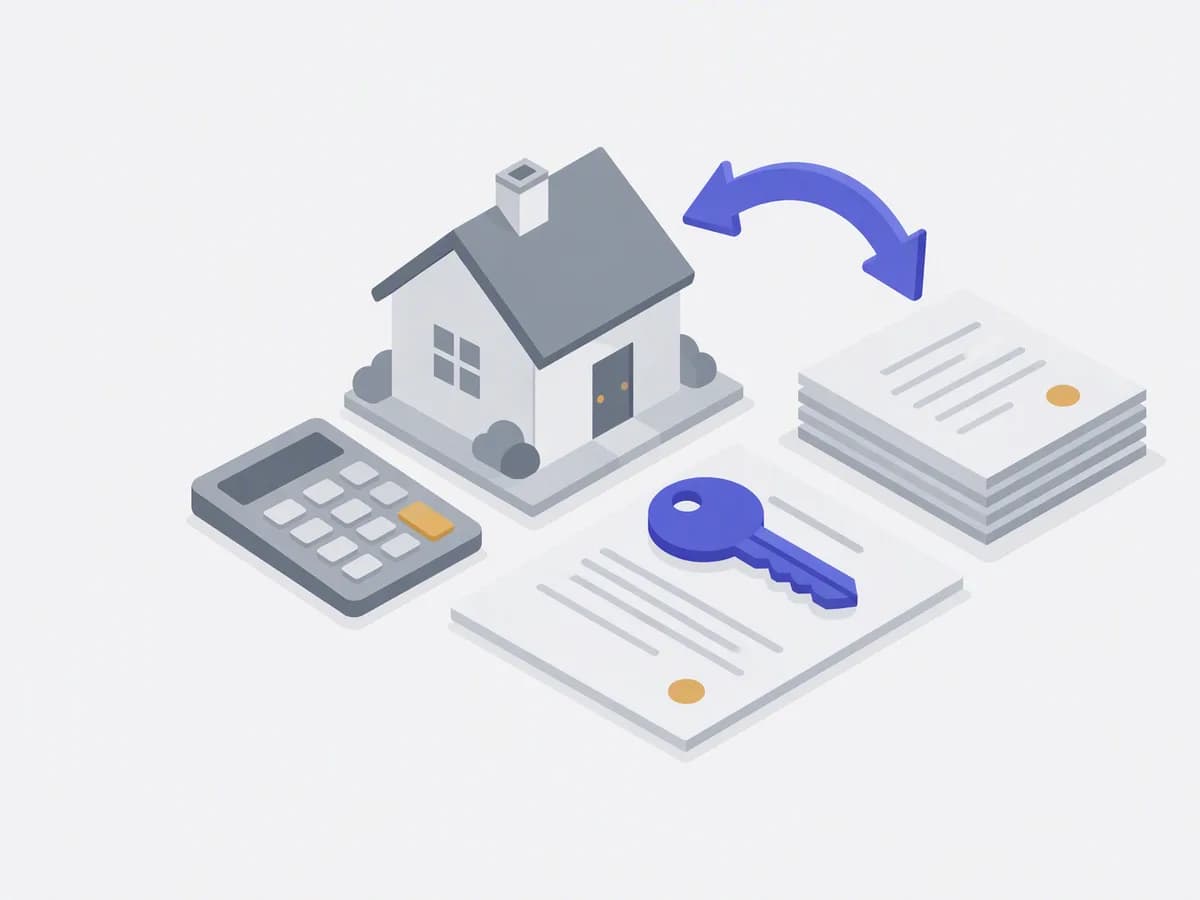
Tax Receipt in Another Name Than the Sale Deed: Is Title Affected?
A property tax receipt in your father's name shows who paid, not who owns. Two Supreme Court rulings of August 2026 explain why only the deed chain proves title.
Who this affects
Must read
Read this if your property's tax/khata name differs from the registered sale deed or you are buying/financing such a property.
- Buyers
If municipal tax name differs from the sale deed, verify the registered deed chain and EC before buying or financing.
- Lawyers & registrars
Due diligence must focus on the registered deed chain and EC; municipal/revenue entries are not conclusive of title.
- Owners
A tax receipt in another name often reflects stale municipal records but requires deed-trace to rule out competing claims.
- Lenders
Lenders will rely on registered deeds and ECs rather than tax receipts when clearing title for loans.
Signals in this story
- Political
- Financial
- Legal
- Regulatory
- Local
Two August 2026 Supreme Court rulings stress that revenue/municipal records show possession/payment, not legal title; Bengaluru e‑Khata rules can block sale.
All a property tax receipt establishes is that somebody paid tax on the property and probably has possession of it. Ownership is a different matter. Title comes only from an unbroken chain of registered deeds, tested against the Encumbrance Certificate (EC), and has nothing to do with whom the municipal office chooses to send bills. When the tax receipt carries your father's name and the sale deed carries yours, you should look into the gap, though it is no title defect in itself.
Do years of paying property tax make me the owner?
They do not. A tax payer is just the person whom the municipal body lists as liable. For one plot of land, India keeps three independent record systems, and none of them alone settles ownership:
- Registration records: the sale deed and the Encumbrance Certificate held at the Sub-Registrar's office. This is the system in which title truly passes.
- Revenue records: the survey number, RTC/pahani and mutation entries kept by the revenue department, chiefly for tax and administration.
- Municipal records: the khata and the property tax assessment, which show whom the municipal corporation bills each year.
Every tax receipt belongs to the third system. It shows who paid and, by implication, who held possession when the bill was issued. It says nothing about whether that person's name runs back through a valid registered deed. For decades, a tenant, a caretaker, a relative managing the property for others or, at worst, an encroacher can pay tax on property that is not legally theirs.
My father is on the tax receipt and I am on the deed. Should I worry?
The answer depends on why the names differ, and two quite different reasons are possible.
The harmless one: your father held or bought the property earlier, a registered sale deed later moved it to you, and nobody updated the municipal tax record. This is very common. Buyers register the deed and get the EC updated, but never apply for transfer of khata or tax mutation, so the municipality goes on billing the old name for years. Your title is fine. Only the tax paperwork is out of date.
The one that deserves a check: the person on the tax receipt has an independent, unresolved claim that never came to light when the property was bought. It happens when a joint family property was divided informally without a registered partition deed, when a co-owner's share was never released, or when an earlier occupant kept paying tax after a sale because the municipality was never told.
The tax receipt cannot tell you which case applies. Only tracing the deed chain can. For a related form of this problem, read how buyers commonly find a mismatch in survey number, sale deed or khata.
The Supreme Court's August 2026 position
Two Supreme Court judgments from the third week of August 2026 both weigh against relying on anything but the registered deed to establish title.
On 20 August, a bench of Justice Sanjay Karol and Justice Augustine George Masih decided Jamnabai and Others v. Vasudev and Others (2026 LiveLaw (SC) 843). The Court ruled that a revenue entry does not create title to immovable property, and does not extinguish it either. The law presumes such entries to be correct, but, the bench explained, this is only an evidentiary presumption that can be rebutted and is not a presumption of title. Civil courts stay fully empowered to decide the underlying title, and the revenue entry merely follows that title without creating it. A family had nearly lost its co-ownership rights because a later revenue entry listed the property under one other person's name. The Court gave them their share back, on the footing that a changed name in a government record does not by itself transfer ownership.
On 19 August, two days earlier, a bench headed by Justice J.B. Pardiwala heard Singapogu Babu Rao and Others v. Special Deputy Collector (Land Acquisition) and Others (2026 INSC 888, also reported as 2026 LiveLaw (SC) 831). The question was an 'enjoyment survey' used to decide who receives compensation for acquired land. In the Court's words, the survey records only the physical occupation that exists on the day it is carried out. It makes no attempt to examine the legal title, right or interest under which anyone occupies the land, so a finding built on possession cannot be taken as conclusive proof of entitlement.
Taken together, the two rulings say one thing about a property tax receipt: it falls on the possession-and-payment side and not on the title side. Revenue and municipal systems note who pays and who occupies. Title depends on the registered deed chain, and that is what a civil court, a lender or a buyer's due diligence examines.
What proves title when the tax receipt cannot?
Follow the deed chain. Each step can be checked against a public record.
- Start from your own sale deed and check that it is registered, correctly stamped, and consistent with the exact survey number and boundaries.
- Gather the mother deed and each link deed that precedes yours, meaning the chain of registered transfers that shows a clean, continuous history of ownership and not just your own purchase.
- Obtain the Encumbrance Certificate for the right survey number, covering the period that the mother deed calls for. A clean EC shows no unreleased mortgage, no pending litigation and no competing registered claim.
- Compare the RTC/pahani and mutation history with the deed. Here a mismatch in names either turns out to be a simple lag or points to an unresolved claim that a lawyer must chase down.
For how far back the chain must go, and why lenders insist on it, see 13-year versus 30-year title chain verification. Has your lender already queried the mismatch and stalled your loan? Then read finding the title problem behind a home loan rejection, which describes the points the bank's legal team is actually testing.
Is it worth correcting the tax record?
It is. Once the deed chain has confirmed your title, ask the municipal body to mutate the khata and the tax assessment into your name. This administrative filing stands apart from any rectification of a deed. Your ownership is not at risk if you skip it, yet banks, buyers and government portals will keep pairing your deed with your father's name, and every time you will need to account for the difference.
Anyone in Bengaluru planning to sell can no longer postpone it. Since 1 October 2024, Kaveri 2.0 has made e-Khata compulsory when a sale is registered in BBMP and GBA areas, which means a tax and khata record that does not match can block registration of your next sale until you fix it.
Check the deed chain before it becomes another person's problem
Having a different name on the tax receipt rarely means your title is lost. Most often the municipality has just not caught up with a registered transfer. Only a trace of the deed chain and the EC will confirm that, and the gap tends to surface at the worst time: at loan sanction, or in a buyer's due diligence. LegiScore's title search report follows the deed chain, fetches the EC for the right survey number and compares everything with revenue and municipal records, so you explain a name mismatch before anyone else raises it. Find out what a LegiScore report covers for property buyers.
Frequently asked questions
- Is a tax receipt enough to prove ownership to a bank or in court?
- It is not. A tax receipt records payment and hints at possession. Courts and lenders rely on the registered sale deed, earlier deeds and the Encumbrance Certificate to establish title.
- How does a khata differ from title?
- The khata is a record kept by the municipality to assess and collect property tax, whereas title is the legal right of ownership and it comes from a registered deed. A change in one does not carry over to the other, so each needs its own filing.
- Can a person who paid the tax for years claim adverse possession?
- Tax payment alone does not give adverse possession. The doctrine needs possession that is open, hostile and continuous for the statutory period, and it is hard to prove. If an outsider has paid the tax for many years, take it as a reason to examine the title chain, not as a claim that automatically defeats you.
- Which documents prove title to a property?
- Your registered sale deed, the earlier registered deeds behind it (the mother deed plus link deeds), and an Encumbrance Certificate, free of entries, that covers the needed period for the correct survey number.
- Could a different name on the tax receipt hold up my home loan?
- It could delay sanction. A bank's legal team will want any difference among the deed, revenue records and municipal records explained. Where the title underneath is sound, a documented trace of the deed chain usually settles the question fast.
- How do I have the property tax record changed to my name?
- Make an application to the municipal corporation or panchayat for transfer of khata or mutation, enclosing the registered sale deed and the most recent tax receipt. The registered deed itself stays untouched, as this is a separate step.
General information only. This is not legal advice; consult a qualified property lawyer for your situation.
Need a property report?
Get a comprehensive title search report powered by LegiScore.
Powered by LegiScore Trusted by homebuyers, lawyers and lenders
Related reading

Mumbai SRA to notify private owners before slum declaration on their land
Laws & Policies 19 Oct 2026
2 min read
Source: The Economic Times
Must read for Owners, Buyers
Khata Shows the Seller, EC Shows Someone Else: Whose Name Counts?
Buying & Selling 23 Sept 2026
10 min read
Must read for Buyers, Sellers

Only a Photocopy of the Title Deed? Verify Before Paying Anything
Buying & Selling 11 Aug 2026
11 min read
Worth a read for Buyers, Sellers
Documents to verify before buying a resale flat in Goa
Buying & Selling 21 Oct 2026
7 min read
Worth a read for Buyers, Sellers