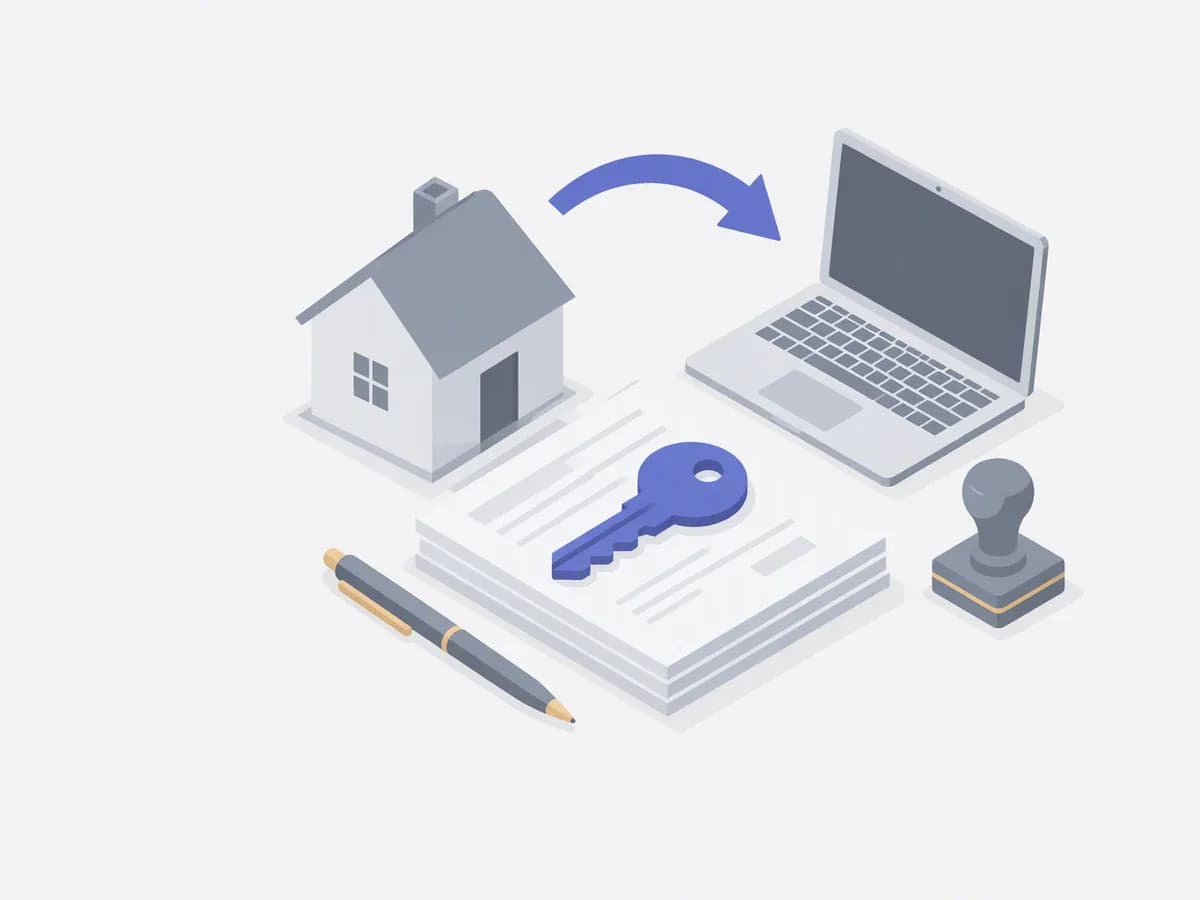
Home Loan Files Wait on Missing Papers, Not on the Lawyer
Which documents a lender needs for title verification, why chasing them takes longer than reading them, and how one upload link fixes it.
Who this affects
Worth a read
Read this if you manage home-loan title checks, run loan ops, or are applying for a mortgage and want to avoid verification delays.
- Lenders
Means lenders should redesign intake to prioritise complete, traceable document collection rather than faster legal review.
- Buyers
Borrowers should expect requests for a full, legible document set and may need to use a single intake link to avoid delays.
- Sellers
Sellers may be asked to provide older link deeds, ECs or tax receipts and to upload them into a single property vault.
- Lawyers & registrars
Legal examiners see faster opinion turnaround once documents are complete; they benefit from traceable, complete submissions.
Signals in this story
- Political
- Financial
- Legal
- Regulatory
- Local
Main signals are financial (loan processing delays, deal risk) and legal (title opinion and document requirements); it cites RBI Fair Practices Code.
Ask a credit operations manager why a mortgage file is late and the answer is usually "the lawyer is slow". That is rarely true. A trained title examiner can read a complete set of papers and write an opinion within a single afternoon. The two-week delay comes from assembling that complete set.
The same pattern shows up across hundreds of files we have seen. Analysis is quick, collection is slow. Yet most efforts to speed up verification, such as faster advocates, parallel review and better templates, work on the analysis side.
Below we look at where the days go, the standard document list and the reason for each item, why collection breaks down in the same ways each time, and what a process designed around collection looks like.
Where the days actually go
ICICI Bank's own home loan guide says legal and technical verification takes about 5-10 days, within a total processing window that most lenders put at 15-30 days. Those figures conceal one thing. Reading and drafting by the lawyer is a small part of the 5-10 days. The larger part is an incomplete file waiting for one more paper.
In bulk files we have run for lenders, the split stays steady. Roughly 60-70% of the elapsed time goes on collecting and chasing missing documents before any legal opinion can begin. Once papers are complete, the opinion is the short step.
So "faster verification" does not need a faster reader. It needs documents that arrive complete on the first attempt, with a clear record of who sent each one.
Which documents does a lender need for title verification in India?
For a normal sale or mortgage, lenders ask for these: the present sale deed; the earlier deeds (mother deed plus link documents) for the last 13 to 30 years; an Encumbrance Certificate for the same years; the Record of Rights or pahani (RoR-1B and adangal in AP/TS); current property tax receipts; the sanctioned building plan; the Occupancy or Completion Certificate for constructed property; and relevant No Objection Certificates (society, RERA, or a release from an earlier lender's mortgage). Agricultural or converted land also needs conversion (NALA) orders. Every paper answers one question. The sale deed shows the transfer now taking place. Link documents show the seller's predecessor had the right to sell. The EC discloses registered mortgages, liens and disputes. The RoR matches the paper owner to the revenue record. Tax receipts show possession and dues. The plan and OC show the building is lawful. Leave out any one and the opinion covers only part of the picture.
This list is the backbone of the whole process. The reason each line is there follows.
What each document is for
The sale deed is the paper being examined, the very transfer the borrower wants funded. By itself it says very little about whether the seller owns the property.
Mother deed and link documents form the chain. Indian title rests on continuity, so each owner must trace rights back to a clean origin. A 30-year chain is the usual depth for a full Title Search Report, as most adverse claims appear inside that period.
The Encumbrance Certificate lists registered charges. It shows if the property is already mortgaged, attached or in a registered dispute. For ordinary retail loans a 13-year EC is common, while 30 years is the careful standard for high-value or contested files.
The Record of Rights or pahani links the deed to the revenue department's own record of the owner. If a sale deed does not match the RoR, stop and look into it.
Tax receipts, the sanctioned plan and the OC/CC cover possession and lawful construction. NOCs remove claims by third parties. Each paper closes one specific type of risk. The list is not red tape. It is the least an examiner needs before calling a title clean.
Why collection goes wrong in the same ways
Take an ordinary file, not a worst case.
Day 1: The borrower sends four items on WhatsApp: the sale deed, two tax receipts and a photo of an Aadhaar card. Three are pictures of printouts, tilted, and in one a thumb covers the corner.
Day 3: The reviewer sees that no Encumbrance Certificate is present and phones the borrower. The borrower says the agent holds it.
Day 4: The agent sends an EC, but it spans 8 years when the policy needs 13. Another request goes out.
Day 6: A link document comes in, but only the second page of a four-page deed. The remaining three are "on the way".
Day 9: The whole link deed arrives and is readable. Now nobody can say whether the Day 1 tax receipt is the latest or last year's. Versions are mixed up.
Day 11: The set is complete at last. The lawyer reads it in two hours and writes the opinion that day.
It took eleven days to assemble the papers and one afternoon to analyse them. None of the delay came from the lawyer.
Root causes
The same few causes appear in nearly every stuck file.
Papers sit with different people. The borrower has a few, the seller has the old deeds, the broker holds the EC and a relative has the tax receipts. Nobody can hand over the full set.
Photos of photos. WhatsApp compresses pictures, and people snap printouts rather than scan them. Survey numbers and dates become unreadable, and an unreadable paper cannot support an opinion.
Pages go missing. Long deeds come in part. The page carrying the property schedule or the witness signatures is usually the one left out.
Mixed-up versions. The "latest tax receipt" turns into three near-identical images across two chats, and no one is responsible for saying which is current.
Nobody owns the checklist. The bank thinks the borrower is tracking what is pending. The borrower thinks the bank will say if anything is absent. Both wait.
What incomplete collection costs
There are three costs, rising in severity.
Longer turnaround. Each exchange adds a day or two of idle time, so a file that could close in a week stretches to three. RBI's Fair Practices Code expects lenders to act on applications within a reasonable period and to acknowledge receipt, and slow collection quietly works against this.
Lost deals. In a busy market a buyer who waits three weeks for sanction may lose the property to a cash buyer. Slow collection does more than postpone revenue. It loses the loan.
Opinions on partial papers. This is the worst result. Pressed to close, an examiner gives an opinion on whatever is on hand and lists the gaps in a caveat that no one reads. If the absent link document concealed an earlier claim, the lender has lent against a flaw it noted in writing but never resolved.
A faster lawyer does not solve this. A collection process that does not lose documents does.
Features of a good collection process
A process built for this problem has five features. There is one entry point instead of five chat threads. A structured checklist knows the difference between a flat-sale file and an agricultural-land file. Follow-ups ask only for the specific missing item, not everything again. A record shows who submitted what and when. And documents stay linked to the report that relied on them, so any opinion can be traced to its source papers.
LegiScore's Collector was built to fill this gap. Rather than chase papers over WhatsApp and email, the lender creates one shareable link and sends it to the borrower or seller. Whoever has the papers uploads them directly to a property document vault. The link holds the property details, so each upload goes to the correct file and not to a general inbox.
How a single link takes the place of the chain
Our own campaign line states it plainly: property documents come as WhatsApp photos, in pieces, over several days, and we swapped that chain for one link. In practice that works as follows.
The Collector link copes with large real-world files. It accepts uploads of up to 500MB and documents of 1,000+ pages, which matters when a 30-year link chain with the EC and plan set runs to hundreds of scanned pages. All of it lands in one vault for that property and not on a reviewer's phone.
When something is absent, the reviewer opens an info request for that property and targets exactly the pending item. The borrower sees what is needed, uploads it into the same thread, and the request closes. Threaded comments sit on the property, so a question such as "is this the latest tax receipt?" is answered where the file is, not in a chat that scrolls away. If a submission falls short, the platform produces a missing-document letter in DOCX, the formal paper banks need on file to show the borrower was asked.
The missing-document letter as a record
A missing-document letter is a dated, formal note that the lender asked for named documents the borrower had not yet supplied. Banks need it for two reasons. It meets audit and Fair Practices expectations that requests were made and acknowledged, and it shows the wait is on the borrower and not the lender. Written by hand, such letters vary and are often skipped. When produced automatically from the real gap in the checklist, the letter names each missing item, carries the property reference and downloads as an editable DOCX ready to file. Operations teams normally rebuild this record afterwards. Here it comes as a by-product of the follow-up.
WhatsApp and email versus a structured upload link
- Completeness · WhatsApp / email: the borrower guesses what to send and gaps show up late · Collector link: a checklist per property type flags missing items at intake
- Traceability · WhatsApp / email: papers spread over chats and inboxes · Collector link: one vault per property, with every file linked to its report
- Follow-up · WhatsApp / email: repeated phone calls asking for everything again · Collector link: a property-level info request names the exact missing item
- Audit trail · WhatsApp / email: who sent what and when cannot be recovered · Collector link: a timestamped log of every submission and request
- Large files · WhatsApp / email: compression, size caps and photos of printouts · Collector link: direct upload of up to 500MB and 1,000+ pages
- Formal letters · WhatsApp / email: written by hand, often skipped · Collector link: missing-document letter generated as DOCX
- Time impact · WhatsApp / email: collection takes days and the opinion waits · Collector link: papers arrive complete and the opinion starts at once
With a complete set in the vault, analysis stops being the constraint. LegiScore delivers a full legal opinion in under 15 minutes once the vault has what it needs. Reading was never the slow part. The eleven days before reading could begin were.
What changes for operations teams
The change in practice is small, yet the benefit is large. Collection stops being a manual chase and becomes a tracked workflow with a single front door. The reviewer's task shifts from reminding everyone about everything to closing the one open info request. File status is always clear: complete, or waiting on these named items, with a letter on record showing they were requested.
For credit and operations teams handling volume, this is the gap between a queue you firefight and one you can forecast. The legal opinion was always quick. Now the file reaches it quickly too.
Frequently asked questions
- Which documents does a home loan title verification need in India?
- The main set is the current sale deed, earlier deeds (mother deed and link documents) for 13-30 years, an Encumbrance Certificate for the same years, the Record of Rights or pahani, up-to-date property tax receipts, the sanctioned building plan, the Occupancy or Completion Certificate, and relevant NOCs. Agricultural or converted land also needs conversion orders. Each paper covers a separate risk, so any missing one leaves the opinion incomplete.
- If the legal opinion is quick, why is property verification slow?
- The time is spent on collection and not on analysis. In files we have handled, gathering papers and chasing missing ones takes roughly 60-70% of the elapsed time before an opinion can start. Reading and drafting is the short stage once papers are complete.
- What is a link document, and why is it important?
- A link document is an earlier registered deed in the property's ownership chain, the one by which a previous owner acquired the property before passing it on. Link documents prove title runs unbroken back to a clean origin. Without the full chain, an examiner cannot confirm that the present seller has the right to sell.
- Is it possible to issue a legal opinion on incomplete papers?
- It can be done with a caveat listing the gaps, but it is risky. If a missing link document or a short EC concealed an earlier claim, the lender has lent against a flaw it flagged yet never resolved. Closing the gaps before the opinion stage removes that exposure.
- How does LegiScore's Collector make document collection faster?
- It replaces scattered WhatsApp and email threads with one shareable link feeding a property-specific vault. It accepts uploads of up to 500MB and 1,000+ pages, runs property-level info requests for missing items, keeps threaded comments with the file and generates missing-document letters as DOCX. When the vault is complete, LegiScore returns a full legal opinion in under 15 minutes.
Sources
We summarise published reporting in our own words and link to the original. Publishers can ask for a correction or removal at editor@landandlaw.in. We act within 48 hours. Editorial policy
General information only. This is not legal advice; consult a qualified property lawyer for your situation.
Need a property report?
Get a comprehensive title search report powered by LegiScore.
Powered by LegiScore Trusted by homebuyers, lawyers and lenders
Related reading

Mint compares home-loan prepayment with SIP investing for borrowers
Buying & Selling 19 Oct 2026
3 min read
Source: Mint
Worth a read for Buyers, Owners

Home loan rate hike: how EMI and tenure choices affect cost
Buying & Selling 20 Oct 2026
2 min read
Source: Mint
Worth a read for Buyers, Owners
Why Due Diligence Matters More Than Ever in 2026
Buying & Selling 13 Oct 2026
7 min read
Worth a read for Buyers, Lawyers & registrars
Delhi NCR: Leasehold or Freehold? Why It Changes Your Purchase
Buying & Selling 9 Oct 2026
5 min read
Worth a read for Buyers, Lenders