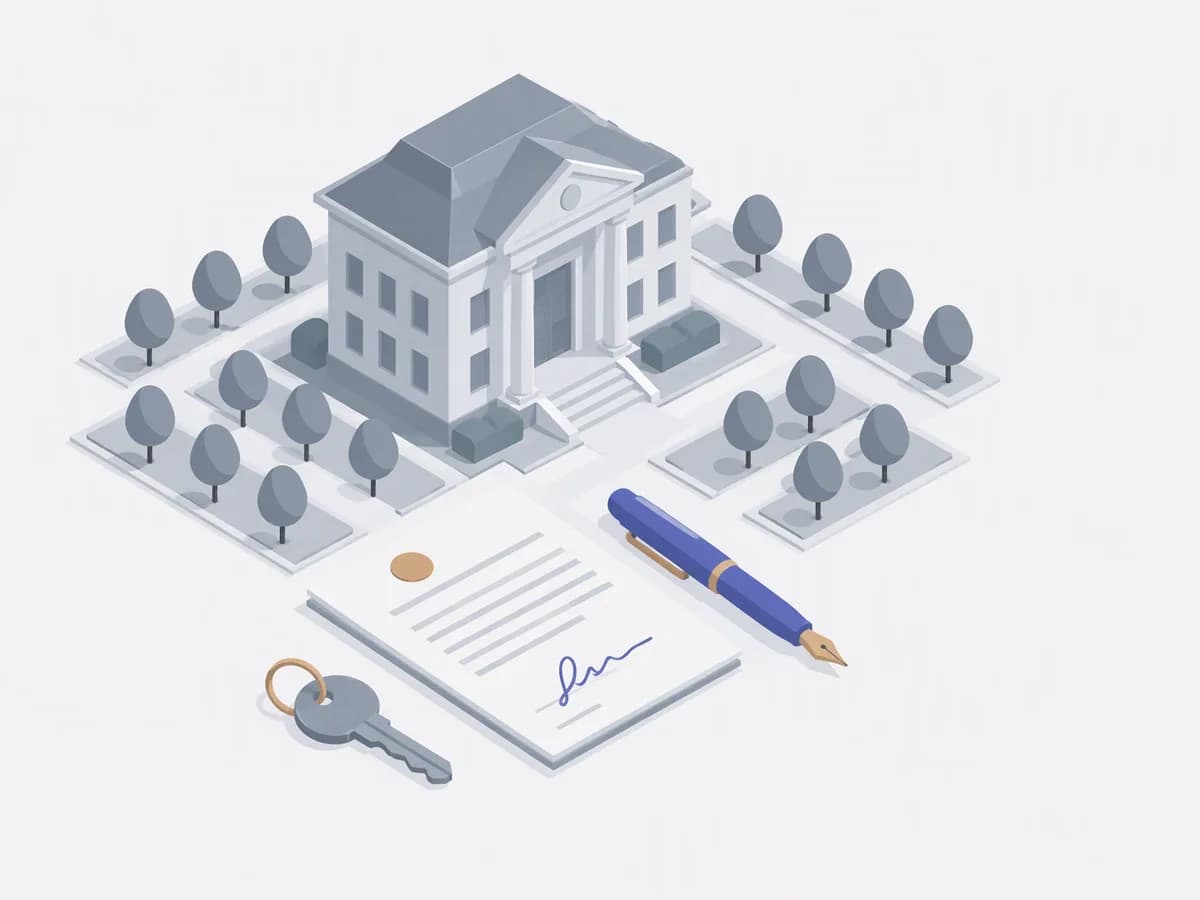
How to register a sale deed in Chandigarh: steps, documents and where it happens
A Chandigarh sale deed is registered at the Sector 17 Sub-Registrar after stamp duty, identity checks and execution formalities.
Who this affects
Worth a read
Read this if you are transferring or buying a Chandigarh property and need to understand the sale-deed registration route.
- Buyers
They need the published fee basis, deed copies and registration process before completing a purchase.
- Sellers
They must execute the deed and appear for the identity and execution checks.
- Owners
The guide explains how registration connects with Chandigarh land and estate records.
Signals in this story
- Political
- Financial
- Legal
- Regulatory
- Local
Chandigarh-specific process, fees and government record systems.
In short, a sale deed for property in Chandigarh is presented to the Sub-Registrar under the Registration Act, 1908, which came into force on January 1, 1909. Chandigarh Administration says its Sub-Registrar works from the 30 Bays Building in Sector 17. The deed must be properly prepared and stamped, then presented by the parties for identity and execution checks with two witnesses. The Administration’s published schedule places stamp duty on a sale, gift or conveyance at 5% of the higher of the property value and stated consideration. It lists registration fee at 1%, capped at Rs 10,000, plus a Rs 20 pasting fee. For a freehold urban sale, the checklist calls for the deed in three copies and identity and address proof for the people signing. After registration, Chandigarh says the document is delivered to the parties on the same day.
AI-assisted, published after automated editorial checks
Key takeaways
- Chandigarh registers sale deeds at the Sub-Registrar’s office in Sector 17.
- The published sale-deed schedule uses 5% stamp duty on the higher value or consideration.
- Registration fee is listed as 1%, capped at Rs 10,000, plus Rs 20 pasting fee.
- A freehold urban sale deed is listed in triplicate with identity and residence proof.
- Registration, mutation and land-record checking are related but separate processes.
What it is
A sale deed records the transfer of an immovable property from seller to buyer. Registration is the official process through which the Sub-Registrar examines the document, confirms execution and enters it in the registration system. The governing central law is the Registration Act, 1908. It was enacted on December 18, 1908 and took effect on January 1, 1909. Section 17 identifies documents that require registration, while Sections 23, 32 and 34 respectively deal with the time for presentation, who may present a document and the registering officer’s enquiry before registration. Registration Act, 1908
In Chandigarh, the Sub-Registrar’s office is in Rooms 1 and 2, ground floor, 30 Bays Building, Sector 17, near the Estate Office. The Chandigarh Administration says documents are presented from noon to 1 pm and registration is handled from 3 pm to 5 pm on working days. It also says registered documents are delivered to the parties on the same day. Chandigarh property registration information
The step-by-step process
- Prepare the sale deed with a complete description of the property, the parties, the consideration and the rights being transferred. The Registration Act’s scheme includes rules on property descriptions and documents containing blanks, corrections or alterations.
- Check the applicable collector rate and compare it with the agreed consideration. Chandigarh’s published sale-deed schedule calculates stamp duty using the higher of value and consideration.
- Arrange payment of stamp duty and registration charges through the methods accepted by Chandigarh Administration. Its property page refers to stamp papers, treasury payment and a certificate mechanism for stamp duty.
- Take the executed deed, required copies and supporting papers to the Sub-Registrar. Chandigarh says a deed must be presented in the prescribed form after execution by the parties.
- The people executing the deed appear for identity and execution verification. Chandigarh says this check is carried out with two witnesses. Its stated witness practice includes that the two witnesses know one another and that the first witness is known to the Sub-Registrar.
- After the Sub-Registrar is satisfied about stamp duty, documentation, identity and execution, the deed is registered. Chandigarh states that parties receive the document on the same day.
- For land-record follow-up, check the relevant mutation or ownership record. Chandigarh’s Revenue Department portal provides access to registration, mutation and jamabandi information.
Documents
The starting document is the final sale deed. Chandigarh’s published checklist requires a freehold urban sale, gift, transfer or exchange deed in triplicate. The same checklist calls for identity and residence proof for the executants and claimants, which includes sellers and buyers. A transfer of lease rights in an urban property requires a no-objection certificate under that checklist. Chandigarh deed fee schedule and checklist
The documents needed in an individual transaction can also depend on whether the property is freehold or leasehold, whether an Estate Office record applies, and whether a prior charge or permission affects transfer. The deed should therefore match the property’s official description and the seller’s recorded interest. The Estate Office maintains ownership records for residential, commercial and institutional properties allotted or auctioned by Chandigarh Administration. Estate Office property management portal
Fees and timelines
Chandigarh’s fee schedule lists stamp duty for a sale, gift, conveyance or sub-conveyance at 5% of the higher of the property’s value or the consideration. It lists registration fee at 1% of that value or consideration, subject to a maximum of Rs 10,000, and a pasting fee of Rs 20. These figures are specific to the published Chandigarh schedule, so buyers and sellers should treat the current official schedule and collector-rate material as the relevant reference before presentation. Chandigarh deed fee schedule and checklist
The Registration Act contains the rules on timing of presentation in Section 23 and provides separately for unavoidable delay in Section 25. Chandigarh’s local page gives operational timings: document inspection is from 9 am to 10 am, presentation from noon to 1 pm, and registered documents are returned after one week from 9 am to 11 am. The same page also says documents are delivered to the concerned parties on the day of registration, so the office’s stated arrangements should be read alongside the type of service involved. Chandigarh property registration information
Common problems
A mismatch between the property description in the deed and the record can slow the process. So can an incomplete description, a missing supporting paper, a document submitted in the wrong number of copies, or a calculation that does not reflect the applicable value basis. The Act specifically deals with property descriptions, plans and documents containing insertions, blanks, erasures or changes. Registration Act, 1908
Leasehold property needs particular care because the Chandigarh checklist expressly calls for a no-objection certificate when lease rights in an urban property are being transferred. Another practical issue is treating deed registration and land-record updating as the same process. Chandigarh’s public systems separately refer to registration, mutation and jamabandi, so the records used after a transfer may not all be updated through one screen or at one time. Chandigarh Revenue Department portal
How to verify
Verification starts with the official property particulars. Compare the address, plot or unit details, area, boundaries and nature of tenure in the deed with the records relevant to that property. For Chandigarh land records, the Revenue Department says its portal lets users view sanctioned mutations and jamabandi by owner name, khewat number or khasra number. It also links to information on registration documents and online appointment or deed-registration services. Chandigarh Revenue Department portal
For property linked to the Chandigarh Estate Office, its portal offers property details and dues-related services. This is useful because a deed can identify the transfer, while the Estate Office maintains its own ownership records for properties under its administration. A registration record is important, but it should be read with the land or estate record that applies to the property. Estate Office property management portal
What this means for buyers and owners
The process is structured around a simple principle: the deed, the price basis, the people signing and the official property description must line up. Chandigarh publishes the office location, working windows, fee formula and core checklist, which makes the basic route clear. The harder part is often not the visit to the Sub-Registrar but ensuring that the deed reflects the correct tenure and property record. For buyers, the value of registration is strongest when the registered deed and the applicable mutation, jamabandi or Estate Office details tell the same story.
Frequently asked questions
- Where is a sale deed registered in Chandigarh?
- Chandigarh Administration places the Sub-Registrar’s office in Rooms 1 and 2 of the 30 Bays Building, Sector 17. Its property page also lists the office’s document presentation and registration windows.
- What are the published charges for a Chandigarh sale deed?
- The Administration’s schedule lists stamp duty at 5% of the higher of property value or stated consideration for sale, gift and conveyance deeds. It lists registration fee at 1%, subject to a Rs 10,000 ceiling, and a Rs 20 pasting fee.
- How many copies of the sale deed are required?
- The Chandigarh checklist specifies three copies for a transfer, sale, gift or exchange involving freehold urban property. It separately says that most other deeds are supplied in duplicate.
- Are mutation and sale-deed registration the same thing?
- No. Chandigarh’s Revenue Department portal refers separately to registration, mutation and jamabandi. A registered deed records the transaction, while the land-record system has its own mutation and record-viewing functions.
Documents
Sources
- Chandigarh Administration: Land/Property: Registration of Property, Wills and Other Documents
- Chandigarh Administration: Rates of Stamp Duty and Registration Fees and Checklist
- India Code, Department of Land Resources: The Registration Act, 1908
- Revenue Department, Chandigarh Administration: Online Jamabandi
- Estate Office, Chandigarh Administration: Property Management System
We summarise published reporting in our own words and link to the original. Publishers can ask for a correction or removal at editor@landandlaw.in. We act within 48 hours. Editorial policy
General information only. This is not legal advice; consult a qualified property lawyer for your situation.
Need a property report?
Upload your documents and get a title report powered by LegiScore for ₹999.
Powered by LegiScore Trusted by homebuyers, lawyers and lenders
Related reading
How to register a sale deed in Delhi: steps, documents and where it happens
State Guides 29 Oct 2026
6 min read
Worth a read for Buyers, Sellers

Chandigarh allows eligible rehab-colony allottees to seek freehold rights
Laws & Policies 20 Nov 2026
3 min read
Source: The Times of India
Worth a read for Owners, Buyers
How to check land records online in Rajasthan
State Guides 26 Nov 2026
6 min read
Worth a read for Buyers, Owners
How to register a sale deed in Punjab: steps, documents and where it happens
State Guides 21 Nov 2026
6 min read
Worth a read for Buyers, Sellers