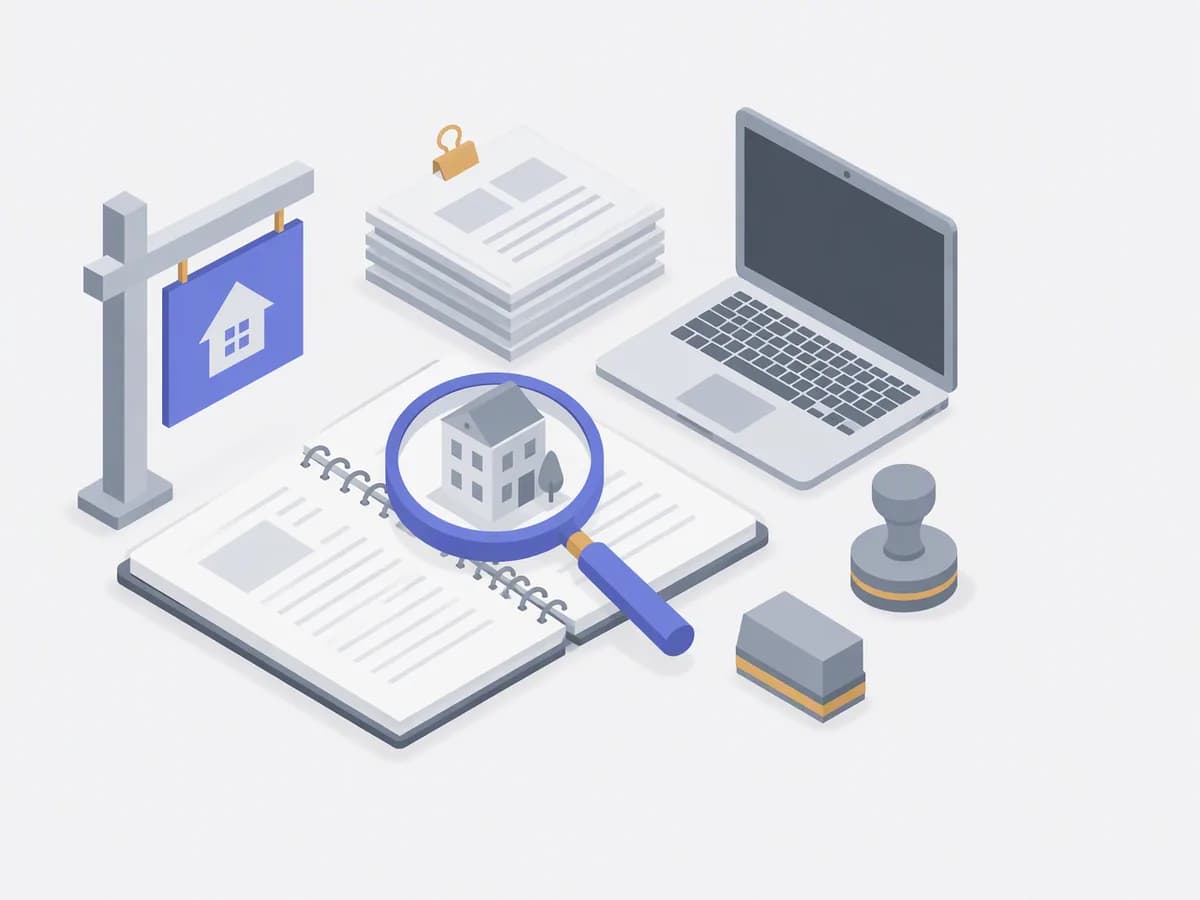
Selling Property Without a Broker in India: Keep the Commission
A seller's guide to skipping the broker in India: the documents you need, how to price the property, and why an independent rating gives buyers confidence.
Who this affects
Worth a read
Read this if you plan to sell property without a broker and want a documents checklist, pricing guidance and ways to build buyer trust.
- Sellers
Guide for selling without a broker, includes documents checklist, pricing tips and how verification can replace 1–2% commission.
- Owners
Explains paperwork and delays that owners should prepare for before listing to avoid stalled no-broker sales.
- Buyers
Describes what buyers (and their banks) will check and how an independent LegiScore rating can substitute for broker trust.
- Lawyers & registrars
Mentions drafting sale agreement with a lawyer, optional licensed-advocate sign-off, and registration at the sub-registrar's office.
Signals in this story
- Political
- Financial
- Legal
- Regulatory
- Local
Financial signal is strongest: the piece focuses on saving 1–2% commission, pricing, bank valuations and faster closings; it also covers title/legal checks.
No Indian law forbids you from selling your property yourself, and the 1-2% of sale value that would have been commission stays with you. Paperwork is not the real difficulty; trust is. When no agent stands behind the deal, buyers waver, negotiate harder, or drift to a listing that looks more believable. Going back to a broker does not fix this. A better replacement for an agent's trust is an independent, verifiable title check that speaks for the property.
The Commission Arithmetic
Brokerage in most Indian cities is 1-2% of the transaction value, charged sometimes to the seller alone and sometimes shared with the buyer. A ₹1 crore flat means ₹1-2 lakh, all of it kept by a direct seller. That amount can pay for much of the stamp duty and registration on your next purchase.
In return you take over all of a broker's usual jobs: pricing the property right, marketing it, screening enquiries, negotiating, and steering the paperwork to registration. None of it is hard, but you must do it on purpose and cannot expect a buyer to turn up and trust you unprompted.
Why Listings Without Brokers Stall: The Trust Gap
Guides to FSBO (for-sale-by-owner) rarely mention this. Whatever else brokers do, they act as trust intermediaries. People buying assume, correctly or not, that an agent wants the listing to be genuine, has looked over the papers, and is not behind a scam. Without the broker, a classifieds browser meets an owner's listing that has no third party attached to it.
So owner listings on generic portals meet more doubt and not less. Fake and duplicate listings are common on high-volume classifieds, and buyers reasonably conclude that they must do extra checks before even booking a visit. Many skip owner listings and pick broker-handled ones, because a broker's involvement, however informal, works like a filter.
Faking a broker's credibility is pointless; supply a better kind. Offer outside verification of the title and legal standing of the property by a third party. Buyers have no need to trust you if the listing carries a data-backed LegiScore Property Score (LPS), a grade from AAA to C out of 1000 covering title integrity, encumbrance, litigation, regulatory compliance and document completeness. Compared with "my broker checked it", the signal is stronger: independent, specific and ready in under 15 minutes, not a casual assurance.
Our guide on verifying property documents before buying lists what buyers should check before trusting any listing.
Papers to Have Ready Before Listing
Whether or not a broker is involved, buyers and their banks will want these. As a seller without a broker, the main thing in your control is to scan them and keep them ready before you list, and not scramble once a buyer asks.
- Original title or sale deed, with earlier sale deeds in the chain · Purpose for buyer and lender: it shows a clear ownership history that can be traced
- Encumbrance Certificate (EC), usually covering 13 or 30 years · Purpose for buyer and lender: it confirms there are no pending loans, mortgages or liens registered against the property
- Latest property tax receipts · Purpose for buyer and lender: they show that dues are cleared and that ownership matches municipal records
- Approved building plan or Occupancy Certificate · Purpose for buyer and lender: they show that the construction is legal and follows sanctioned plans (RERA or local body)
- Society NOC and share certificate (apartments) · Purpose for buyer and lender: the housing society needs them to approve the resale and transfer the name
- Mutation extract, khata or patta · Purpose for buyer and lender: it brings local revenue records up to date with the current owner
- Loan foreclosure letter or bank NOC, if mortgaged · Purpose for buyer and lender: it shows the lender has released, or will release, its charge on the property
- ID proof, PAN and Aadhaar · Purpose for buyer and lender: needed as KYC for executing and registering the sale deed
- RERA registration number, for projects under construction or recently completed · Purpose for buyer and lender: it shows compliance at project level
One missing paper typically costs a week or longer of exchanges once a serious buyer shows up. Such delay is what kills deals handled without brokers, as buyers already have less patience with owner listings than with agent-handled ones.
Setting a Realistic Price With No Agent
Another quiet job of brokers is to bring sellers down from unrealistic asking prices. On your own, it is easy to fix on what you would like and ignore what the market will pay. Look at recent comparable sales that actually happened, in your building, layout or immediate area, and not at portal asking prices, which are routinely inflated. A correctly priced, verified property moves faster than one that is priced high and unverified, even after counting the commission you save. Combine several sources: a bank valuation, a recent registered deal in your building obtained from the sub-registrar's office, and portal prices, which usually exceed transacted values. Together they give a more realistic figure than any one alone.
Finding Buyers Without a Broker
Classifieds portals such as 99acres, Housing.com and MagicBricks do give reach, since most buyers start their search there. Visibility is not your problem; sameness is. Your listing looks like hundreds of others, genuine or duplicate. Beyond portals, people overlook the residents of their housing society, local community groups and referrals by word of mouth. A buyer sent by a referral has some trust already, and a verified listing gives strangers on a portal the same.
The LegiScore Marketplace addresses this exact problem. Every listing there bears an independent LPS title rating. Buyers who filter for genuine, verified properties therefore find yours as it has been checked, and no broker's name is needed. In effect it substitutes for the trust a broker supplied, at no commission. Our seller resources hub gives a step-by-step guide to listing with a verified rating.
Negotiating and Closing on Your Own
With no broker managing the exchanges, these habits help:
- Qualify buyers early. Ask how they will pay, by pre-approved loan or own funds, before putting serious time into negotiation.
- Make the verified rating work for you. When your LPS is AAA or AA you have a fair reason to hold your price: a clean title verified independently is worth more than an unverified one, as buyers who understand due diligence will agree.
- Photos and floor plans should be recent and truthful. Cautious buyers dealing with owners treat old or mismatched visuals as a red flag, so show exactly what they will see during the visit.
- Take a token or earnest amount, with clear written terms, before you pull the property off the market for any buyer.
- Prepare the sale agreement carefully, with a lawyer or from a template that has been vetted, and cover the price, schedule and conditions.
- Register at the sub-registrar's office with jurisdiction over the property and pay the applicable stamp duty, which differs from state to state.
What LegiScore Brings
If you sell without a broker, you give up the informal, often exaggerated reassurance that came with one. LegiScore substitutes something firmer, namely a 29-section AI-generated report plus an AAA-to-C LegiScore Property Score. They rest on checks in 14 states, 70+ government portals and court records of 700+ district and high courts, and arrive in under 15 minutes. With that rating beside your property on the LegiScore Marketplace, buyers receive what a broker's name never truly guaranteed: an independent, data-backed answer about title, encumbrance and litigation risk, not a middleman's word. If a buyer or lender wants more assurance, a licensed advocate's sign-off is available as an optional add-on, priced on request.
Know any property's legal health in under 15 minutes: order a LegiScore title search report, and list without a broker and without doubt.
You may not have priced in that verification also shortens closing. The companion post on selling property fast with a verified title explains how a rating obtained up front prevents last-minute renegotiation.
Frequently asked questions
- What is the way to sell my property without a broker in India?
- Start with a price based on real comparable sales and have the title deed, EC, tax receipts and approvals ready. Next obtain independent title verification, for example the LegiScore Property Score, and publish where buyers can see it, as on the LegiScore Marketplace.
- Which documents does a seller need to sell a flat without an agent?
- Keep the original and earlier sale deeds, an encumbrance certificate, the most recent property tax receipts and the approved building plan or occupancy certificate. Apartments also need a society NOC with share certificate, and a loan on the property needs a bank NOC or foreclosure letter.
- How can I make buyers trust a listing that has no broker?
- Your word alone is not enough, so attach verification from an independent third party. A rating backed by data, like the LegiScore Property Score on title, encumbrance, litigation and regulatory compliance, gives buyers the comfort a broker is supposed to give, at no commission.
- How much commission do I really save by selling without a broker?
- Brokerage in most Indian cities usually runs 1-2% of the sale value. A seller who sells directly keeps roughly ₹1-2 lakh on a ₹1 crore property.
- Is it legal to sell property in India without an estate agent?
- Yes. No law requires a broker for selling property in India. You must handle the sale agreement, stamp duty and registration correctly yourself or with a lawyer, since brokers do not provide those services either. A broker only helps to find buyers and negotiate.
- How do I verify my own property's title before listing it myself?
- Use an independent checker, for instance the LegiScore Property Score, which examines government land records, encumbrance certificates and court databases across 700+ district and high courts within 15 minutes. You then know where your title stands before listing.
General information only. This is not legal advice; consult a qualified property lawyer for your situation.
Need a property report?
Get a comprehensive title search report powered by LegiScore.
Powered by LegiScore Trusted by homebuyers, lawyers and lenders
Related reading

For Most Buyers, the Risk Is Not the Price but the Title
Expert Views 10 Oct 2026
4 min read
Worth a read for Buyers, Lawyers & registrars

Elders' Gift Deeds: When a Tribunal Can Cancel the Transfer Years Later
Expert Views 24 Jul 2026
10 min read
Must read for Buyers, Owners
Land Near a Mosque or Dargah in 2026: Waqf Title Risk, Settled and Unsettled
Expert Views 24 Jul 2026
10 min read
Must read for Buyers, Lenders

DLF plans ₹58,000 crore residential pipeline in NCR and Mumbai
Property News 18 Oct 2026
3 min read
Source: Hindustan Times
Worth a read for Buyers, Investors